WHAT IT DOES
One record a sale, and everything else follows from it.
Six things, each with the screen that does it. The pictures are the application, not drawings of it.
THE SALE
One record, with the price broken up the way it is really charged.
A sale carries its client, its developer, what was sold and what it cost — and keeps the property cost apart from the statutory fees, because commission is earned on one and not the other.
- Outright, or instalments over any number of months
- The developer and the estate, picked from your own lists
- Statutory fees separated from the property cost
- A reference you can read out on the phone

THE SCHEDULE
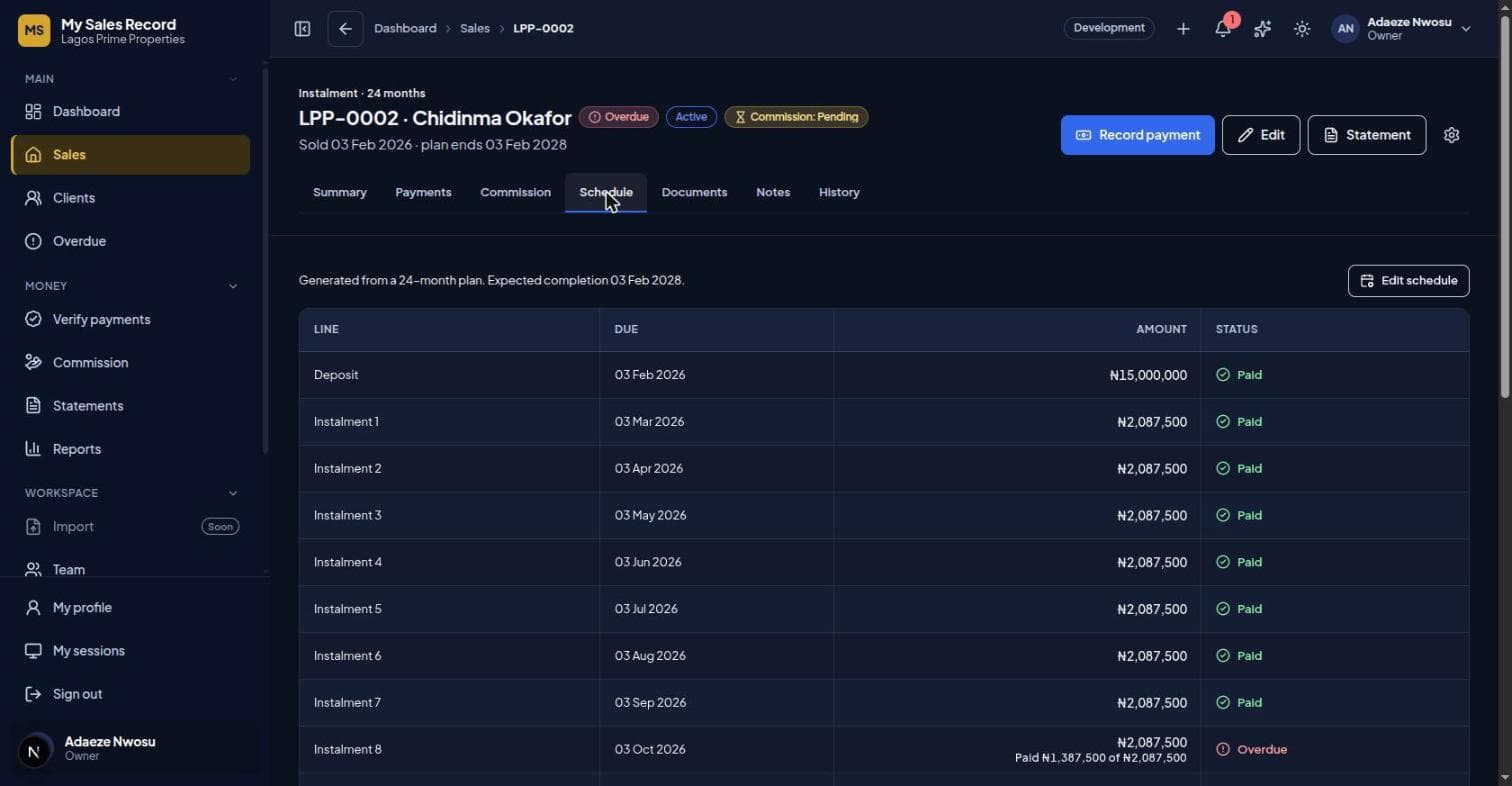
The payment plan builds its own schedule.
Enter the price, the deposit and how long the buyer has. Every instalment and due date follows, and a revised schedule keeps the version it replaced so nobody argues about what was agreed.
- Every instalment with its due date and its amount
- The deposit and the balance kept apart
- A revision keeps the schedule it replaced
- What is paid, what is left and what is late, per instalment
THE MONEY
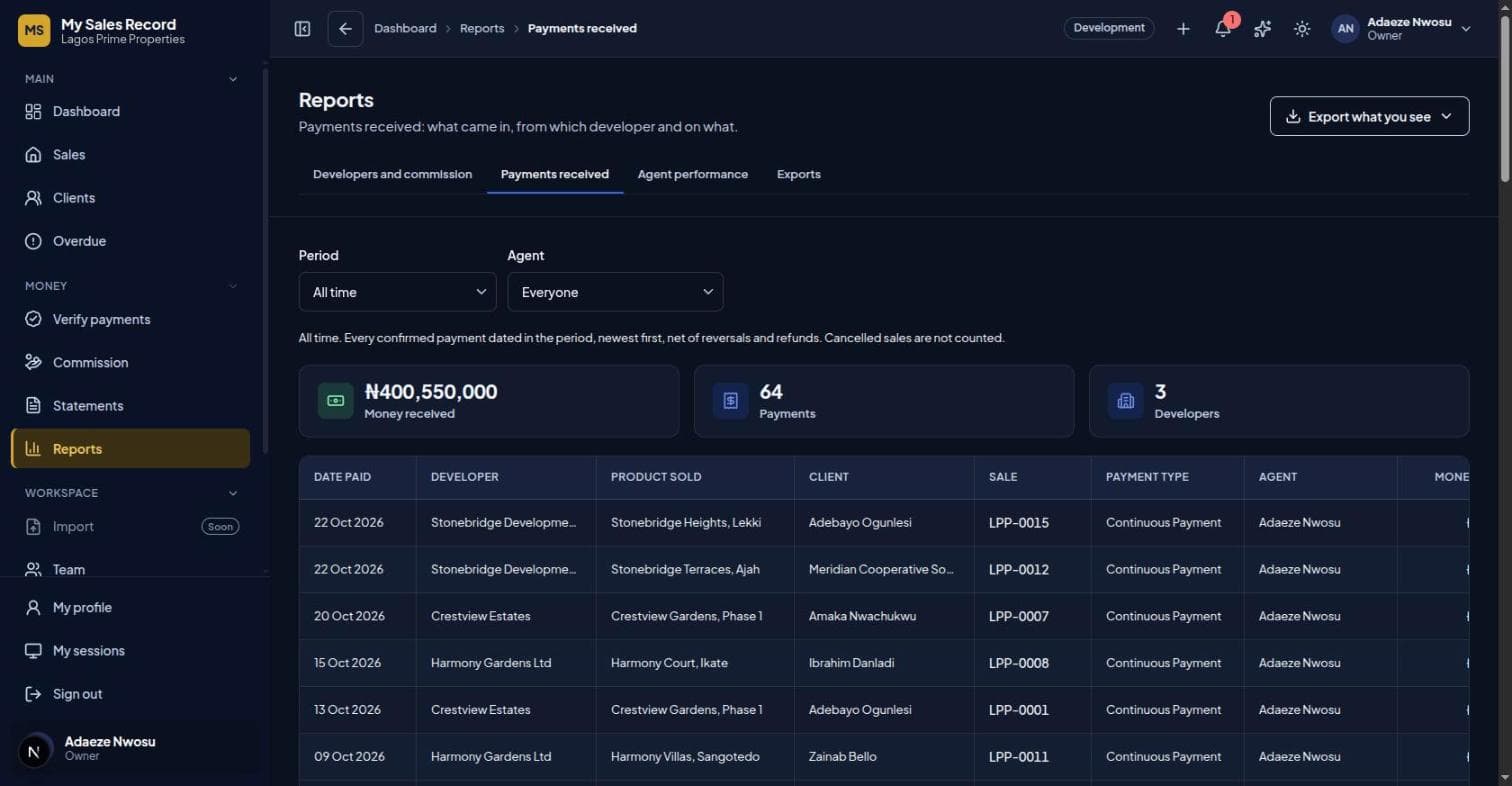
A payment is a record with evidence and a name on it.
An agent records the transfer with its bank reference and the evidence attached. In an agency an owner or admin confirms it before it counts, so the figures on the screen and the money in the bank are the same figures.
- The bank reference and the transfer evidence, kept with the payment
- Confirmed by a named person, with the time they did it
- Refunds and reversals recorded as entries, never deletions
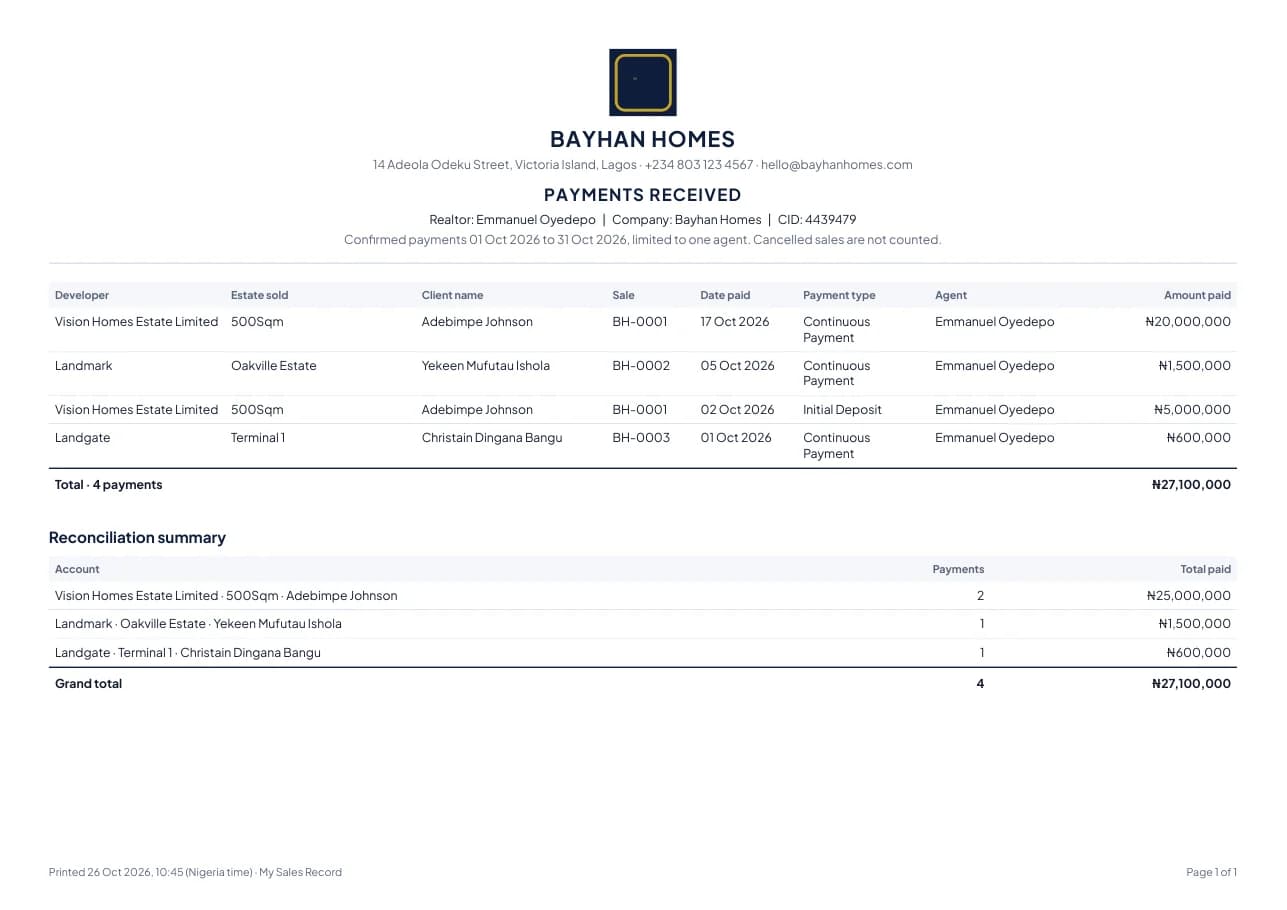
- Every payment in the period, with its developer and estate
YOUR COMMISSION
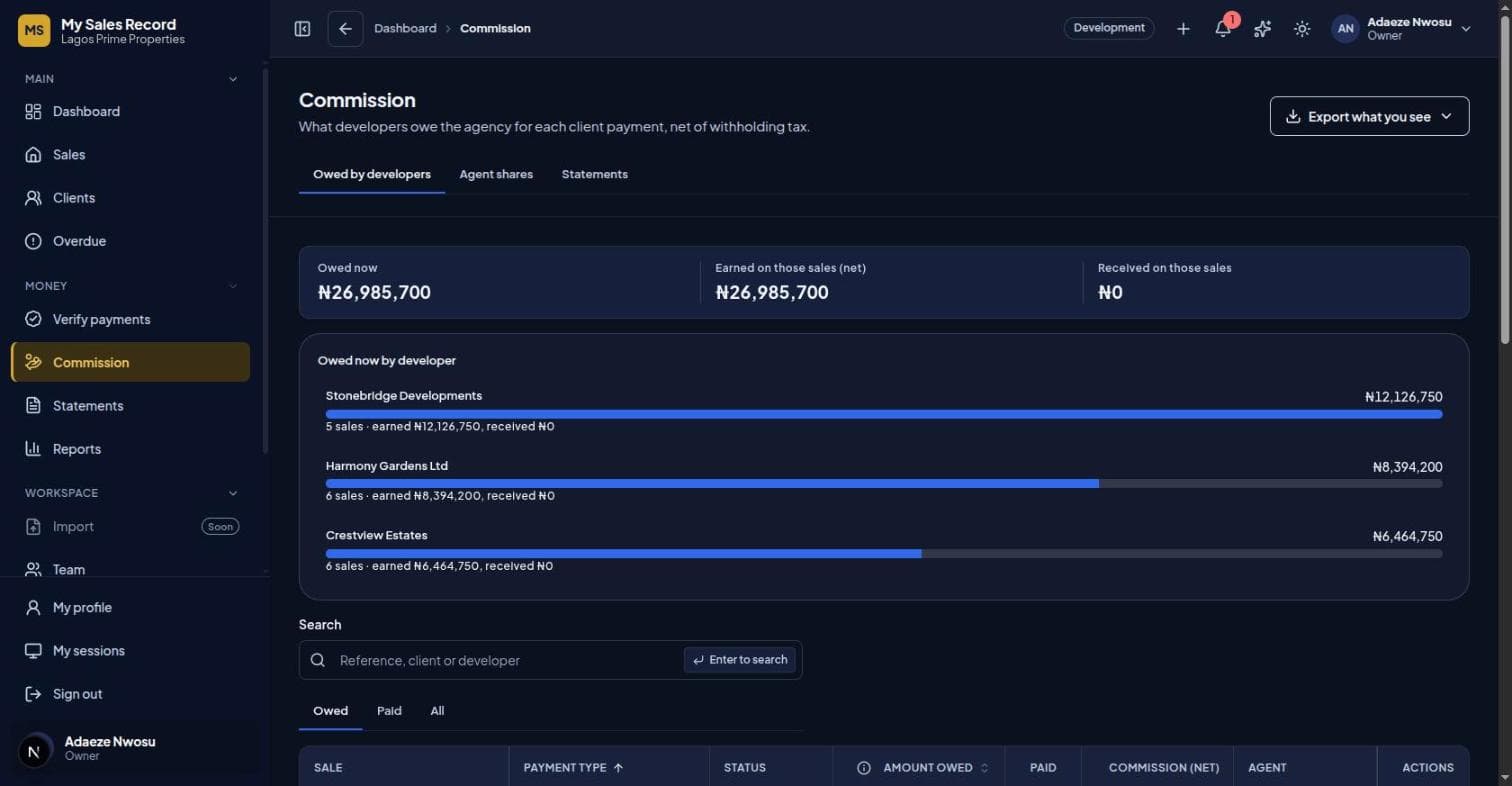
Four different questions about commission, answered separately.
What the whole sale will earn, what has been earned as the buyer pays, what the developer has actually paid you, and what they still owe. Withholding tax comes off at the rate you set.
- Earned as money arrives, not when the sale is signed
- A percentage of the property cost, or a fixed amount
- Withholding tax taken off at your own rate
- Each agent's share of the agency's commission
WHO IS BEHIND
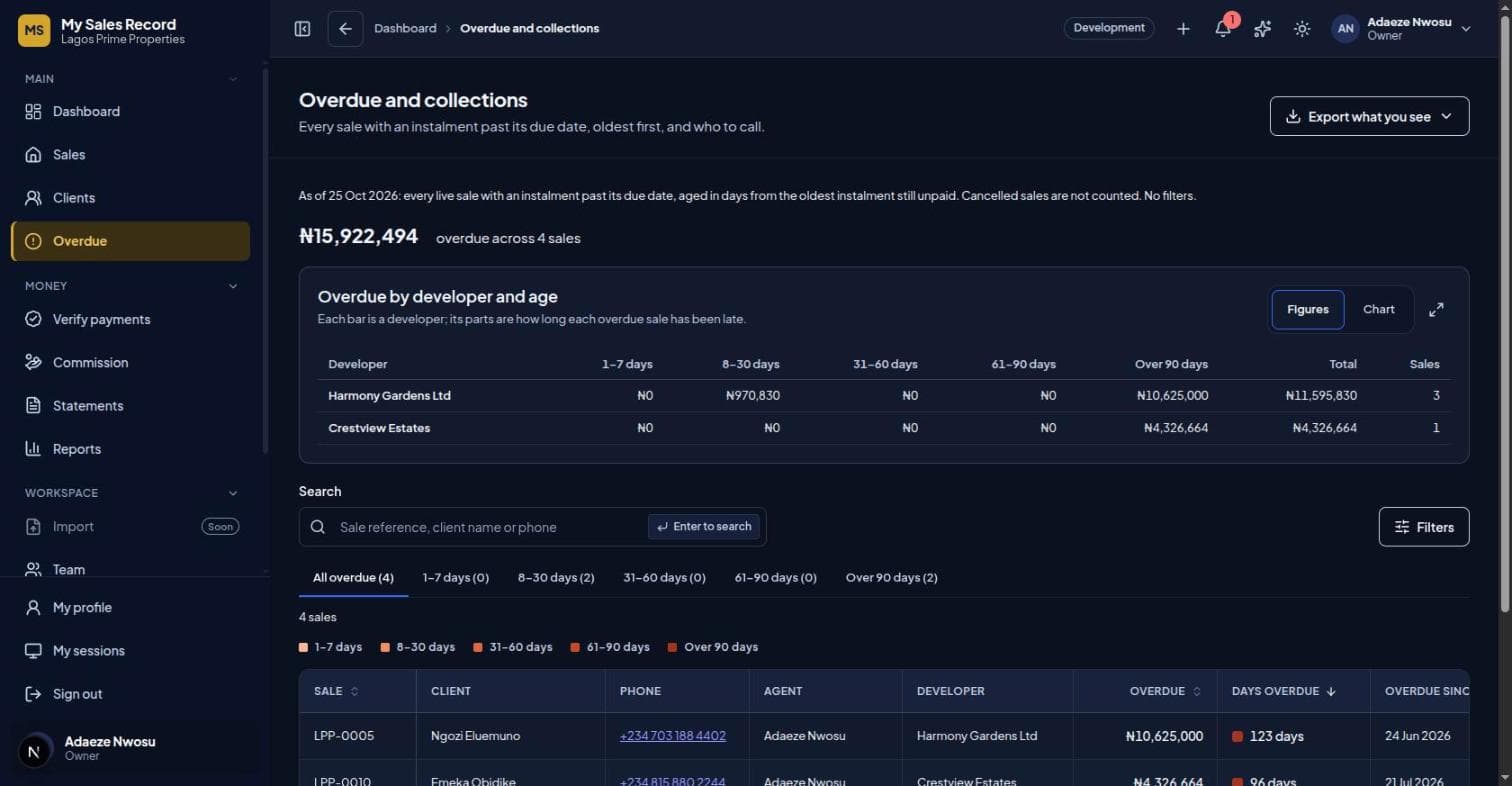
Overdue counted from the date you agreed.
Not from the day somebody remembered to look. Every late instalment, in ageing bands, oldest first, with the sale and the person to call.
- Ageing bands, so a week late and a year late are not the same thing
- By developer, so you know which estate is slipping
- The sale, the client and the agent on one line
- Exportable, to take to a meeting
ON PAPER
A printed sheet on your own letterhead.
Every report prints with your logo, your business name and the consultant number commission is claimed against — then the rows, a total, and a reconciliation that adds each client up. Excel and CSV come from the same place.
- Your own logo, address and consultant number on every sheet
- A reconciliation under the rows, ending in a grand total
- Excel, CSV or PDF, from every report and every list
- A statement of account for any client, whenever they ask
WHO MAY DO WHAT
An agent records. An owner confirms.
The question every agency owner asks first: can my agents see each other's sales, and can they see what the agency earns?
The owner
Everything: the sales, the money, the commission, the people and the subscription.
An admin
The day's work — sales, clients and confirming payments — without the subscription.
An agent
Their own sales and their own clients. Whether they see commission figures is yours to set.